
She Got a D in Creative Writing. Then She Changed Literature.
Susie Hinton and the surprising legacy of The Outsiders
In the canon of modern American literature, few novels cast a longer or more poignant shadow than The Outsiders. The deeply empathetic, gritty tale of orphaned high schooler Ponyboy Curtis—along with his brothers and their tight-knit crew of working-class friends struggling to survive actual class warfare—accomplished something truly groundbreaking and unexpected when it hit bookstore shelves in 1967: It spoke directly to teenagers.
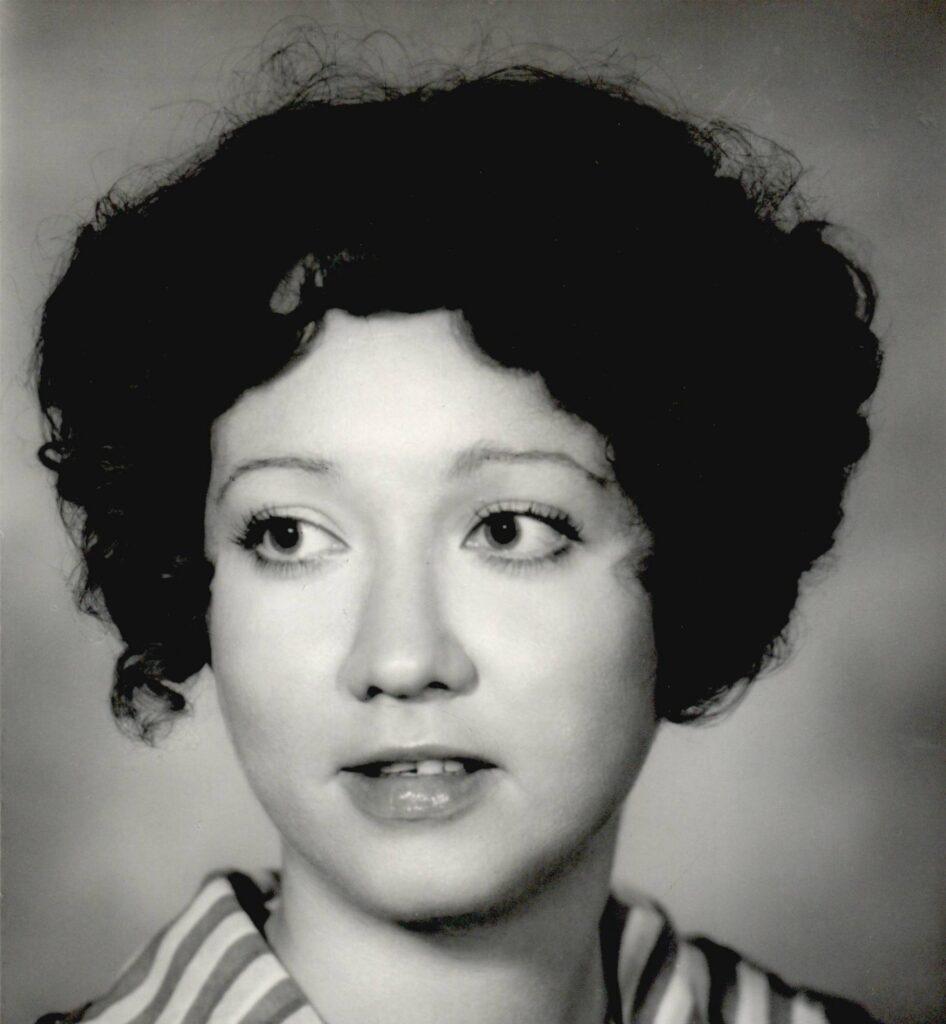
S. E. Hinton. Oklahoma Publishing Company Photography Collection, courtesy of the Oklahoma Historical Society. From the OKPOP Vault.
Here, finally, was a book that didn’t whitewash the harsh realities of their lives. On the contrary…it made them feel seen.
Today, The Outsiders is widely regarded as the book that single-handedly launched the modern Young Adult (YA) literature genre. And, as it turns out, the story behind this literary cornerstone is every bit as compelling as the novel itself.
Real Life
Long before S. E. Hinton was a household name, the author was simply Susan Eloise Hinton, a quiet, observant girl growing up in Tulsa, Oklahoma. Born in 1948, Hinton was an ardent lover of literature from a very young age.
“When I was young, I read everything, including cereal boxes and coffee labels,” says Hinton. “Reading taught me sentence structure, paragraphing, how to build a chapter. Strangely enough, it never taught me spelling.” [1]
As she grew older, however, she was frustrated to find the books available to teenagers at that time were nothing more than adolescent fluff filled with sappy, unrealistic romances and syrupy tales of prom dates and first kisses. It bore no resemblance to the social discord and sporadic violence she witnessed firsthand at Tulsa’s Will Rogers High School. Irritated by the void of realistic, heartfelt literature available to teenagers, she decided to write about the life she and her classmates actually lived.
Hinton began writing what would eventually become The Outsiders when she was only 15 years old. She completed the bulk of the manuscript at 16 during her junior year of high school. Her inspiration was profoundly personal and inspired by actual events she had witnessed: Gang rivalry between the working-class Greasers and their affluent crosstown rivals, the Socs (pronounced “soshes”). The violence was a direct reflection of the social warfare plaguing her school.
“One day a friend of mine was walking home from school and these ‘nice’ kids jumped out of a car and beat him up because they didn’t like him being a Greaser” says Hinton. “This made me mad and I just went home and started pounding out a story about this boy who was beaten up while he was walking home from the movies—the beginning of The Outsiders. It was just something to let off steam. I didn’t have any grand design. I just sat down and started writing it. I look back and I think it was totally written in my subconscious or something.” [2]
Hinton explains she was truly bewildered by the violence. She had friends in both camps but never felt that she fit into either one.
“The Socs wore wheat jeans and got drunk and beat each other up, and everybody thought they were cool,” says Hinton. “The Greasers wore blue jeans and black jackets, and got drunk and beat each other up, and everybody thought they were scum.” [3]
In a twist of exquisite literary irony, Hinton received a D in her high school creative writing class while penning one of the most successful and enduringly popular novels in American history. In truth, Hinton’s low grade had nothing to do with her nascent writing abilities. The D was a result of her failure to complete class assignments due to her feverish devotion to finishing her magnum opus.
Hinton’s teacher, of course, was oblivious that such a groundbreaking masterpiece was blossoming right there in her classroom. Even Hinton’s mother was doubtful of her daughter’s aspirations, urging her to look for a “real job.” Writing was no way to make a sustainable living, after all.
But Hinton wouldn’t be deterred. Driven by an intense internal rebellion and a resolute commitment to her work, she kept on writing.
“When I wrote (The Outsiders) I hadn’t thought of getting it published,” she says. But at school one day Hinton mentioned to a friend that she was working on a novel. As it turned out her friend’s mother was a children’s book author. “I gave her a copy of The Outsiders,” says Hinton, “and this woman showed it to a friend who had a New York agent. The agent liked it and sold it to the second publisher who read it.” [4]
Hinton’s publishing contract arrived on the day she graduated from high school in 1966. Because she was only 17 and legally a minor, her mother had to co-sign the agreement. Upon the recommendation of her publisher, Viking Press, she chose to publish under the pen name S.E. Hinton. The marketing team feared that male book reviewers and young boys would immediately dismiss a gritty, realistic gang narrative if they knew it had been written by a teenage girl. Hinton agreed, effectively cloaking her gender behind initials that would soon become legendary.
Instant Classic
When The Outsiders arrived in bookstores in 1967 it was an immediate success, captivating the attention of young people who had long felt unseen by the publishing industry. It circumvented the traditional literary channels and shot directly into the imaginations of teenagers, subverting the whitewashed tropes of the era and introducing mainstream culture to themes of class warfare and teenage emotional vulnerability.
Hinton’s debut novel would go on to sell more than 14 million copies. Decades later, it continues to sell hundreds of thousands of copies annually.
Though The Outsiders remains her signature success story, S.E. Hinton proved that her literary insight into the teenage psyche wasn’t a “one and done” phenomenon. She followed her debut with a string of critically lauded contemporary young adult novels, most of which were also set in Oklahoma, and explored the challenging social and personal dynamics of teenage life in America.
In 1971, she published That Was Then, This Is Now, an exploration of two foster brothers whose close, lifelong bond disintegrates as they barrel down wildly divergent paths of crime and maturity. Four years later, Hinton’s next novel, Rumble Fish, offered up the dark, stylized tale of Rusty-James, a street hoodlum in Tulsa trying to measure up to the fabled reputation of his older sibling, the Motorcycle Boy. 1979 brought us Tex, a story inspired by Hinton’s lifelong love for horses and horseback riding, featuring two brothers who are left to raise themselves on a rural Oklahoma farm.
Hinton’s reputation as an exceptional novelist who understood teenage culture was writ large in the early ‘80s when several of her books were adapted into major Hollywood films, most notably Disney’s Tex (1982) and Francis Ford Coppola’s iconic 1983 cinematic adaptations of both The Outsiders and Rumble Fish…all three filmed in the Tulsa area. Later in her career, Hinton expanded her stylistic repertoire even further, writing children’s chapter books like The Puppy Sister and venturing into mature psychological fiction with her 2004 adult novel, Hawkes Harbor.
Saving Place
In the decades following the publication of Hinton’s young adult masterpieces, some of the physical locations in Tulsa that appeared in The Outsiders have become historic touchstones for her legions of fans.
Two of those locations, however, easily top the list: The iconic Admiral Twin Drive-In (still in operation to this day), and a modest north Tulsa house that served as the home of the Curtis brothers in Coppola’s film adaptation. Unfortunately, by the early 2000s that beloved house had fallen into severe disrepair, facing the very real threat of demolition.
Enter Danny Boy O’Connor. Best known as a founding member and rapper of the legendary ‘90s hip-hop group House of Pain (renowned for their platinum-selling anthem “Jump Around”). As it turns out, O’Connor also happens to be a lifelong, devout fan of S. E. Hinton, her legendary novels, and Coppola’s film adaptations of The Outsiders and Rumble Fish. While on a tour stop in Tulsa, O’Connor hired a cab to drive him past various filming locations. Upon seeing the ramshackle Curtis brothers’ house, he felt a deep urge to save it from destruction.
So in 2016, O’Connor purchased the property out of his own pocket.
And then he moved to Tulsa.
And then he launched an intensive fundraising and community restoration project to gut the house to its studs and rebuild it to look exactly like it did onscreen in 1983.
He was a man on a mission.
“The Outsiders made an impact on me because I grew up in a broken home and I felt the way that those characters felt,” says O’Connor. “My father went to prison when I was two years old and my mother worked nights, and so I looked for other kids in a similar situation. And when I saw the way that Dally looked out for Johnny, and the way that Two-Bit looked out for Pony, I thought if I could just find that in life, life would be OK.” [5]
O’Connor’s driving ambition to save the crumbling building for future generations can only be described as an extraordinary labor of love. Through his efforts, high-profile donations poured in from fellow fans like musicians Jack White and Billy Idol. Hinton herself offered her full blessing and support. In 2019, O’Connor officially opened The Outsiders House Museum to the public.
The museum has quickly become a cultural landmark in Tulsa, drawing thousands of visitors from all over the world. Packed with authentic movie props, clothing and furniture from the film, and behind-the-scenes photography, The Outsiders House is more than a tourist attraction. It’s become an educational destination, hosting hundreds of middle school students yearly, giving them a physical connection to Hinton’s imagery while they’re reading her book in class.
Just think of it: Nearly six decades ago, an introspective teenager from Tulsa, working from her bedroom at home, quietly created an enduring classic that deeply affected generations of readers and moviegoers, and still does to this day. Hinton’s personal story is a perfect example of blooming where you’re planted…of diving into the act of creation without waiting around for “permission” or the perfect circumstances. She embodies OKPOP’s motto: They did it, so can you.
If you want to create something, don’t wait. Make it happen. Right here. Right now. Like Susie did.
Sources
[1] https://theoutsidersfanclub.weebly.com/exclusive-interview-with-se-hinton.html
[2] https://www.latimes.com/archives/blogs/jacket-copy/story/2012-05-15/stay-e-gold-ponyboy-the-outsiders-becomes-an-e-book
[3] https://clickamericana.com/media/books-media/how-outsiders-rumble-fish-author-s-e-hinton-got-her-start-1975
[4] https://theoutsidersfanclub.weebly.com/exclusive-interview-with-se-hinton.html
[5] https://www.facebook.com/AARP/videos/674029645654642
